Beyond the final model: studying the training dynamics of an AI weather model
by Annabel Wade
An Evaluation of Multivariate Extremes in AI Climate Models
by Ashley Dwyer
About
Annabel: As the prevalence of AI weather models rapidly grows, building trust and improving their skill will depend on elucidating how these complex, nonlinear models learn and identifying whether they are consistent with our knowledge of physical relationships. In this work, we analyze the training dynamics of a Spherical Fourier Neural Operator model, examining when it learns fundamental physical principles such as geostrophic balance and cross-variable relationships. As the learning unfolds, analyzing the model’s complexity reveals a key phase transition that precedes the learning of physics and generalization capabilities. Studying AI weather models from a training dynamics lens offers a new way to develop trust in these models and guide future improvements.
Ashley: Hot and dry extremes that occur at the same time, in the same place, have long garnered attention due to their potential to significantly impact the environment, agriculture, and human health. Here, we look at their simulation in six AI climate models, as part of the first AI Model Intercomparison Project (AIMIP). We evaluate the simulated monthly frequencies in their raw form compared to observational products over the last 45 years, as well as after applying a simple bias correction. Overall, these results present a promising view of current AI climate models’ ability to simulate monthly-mean hot and dry compound extremes even though the models struggle with their seasonality in some regions.
Details
- Date:
- Friday, December 4, 2026
- Time:
- 12:00 PM - 1:00 PM
- Location:
- CDS 1646
- Theme:
- AI, Environmental Science
Speakers
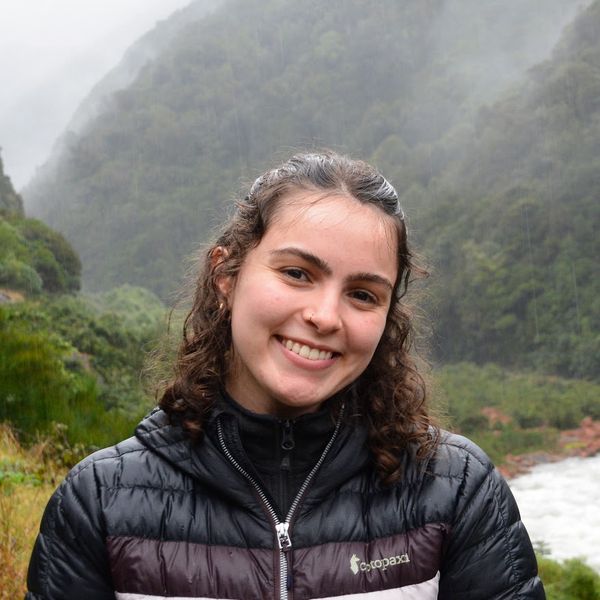
Annabel Wade
Annabel Wade is a PhD student at Boston University’s Faculty of Computing and Data Sciences, working with Professor Elizabeth Barnes. She works on interpretable deep learning for weather and climate by examining training dynamics and revealing how emulators learn physics. Previously, she worked on deep ensembles for wildfire smoke detection at the National Oceanic and Atmospheric Administration, as well as statistical methods to analyze ocean circulation at the University of Washington.