CDS STUDENT
SEMINAR
SERIES

Join us every Friday at Boston University Faculty of Computing and Data Sciences (CDS) for cutting-edge research presentations by CDS PhD students across data science, AI, and beyond.

Fridays • 12–1 PM • Duan Family Center for Computing and Data Science 1646

What We Do

We are a student-run initiative within the PhD department of Boston University Faculty of Computing & Data Sciences, dedicated to fostering knowledge sharing and academic growth across our community.

Our Mission?

Create a space where students can explore, present, and discuss the research topics they're passionate about in a supportive, collaborative environment.

Every Friday from 12:00 to 1:00 PM in CDS 1646, CDS researchers present on work that excites them—whether it's their current research, an inspiring paper they've discovered, or a hands-on workshop in their area of expertise. From artificial intelligence to biological sciences, our seminars cover the full breadth of computer and data science.

Meet the Organizers

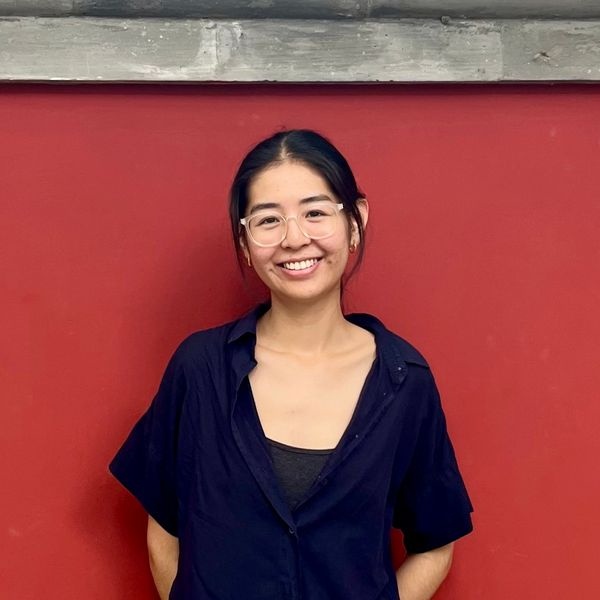
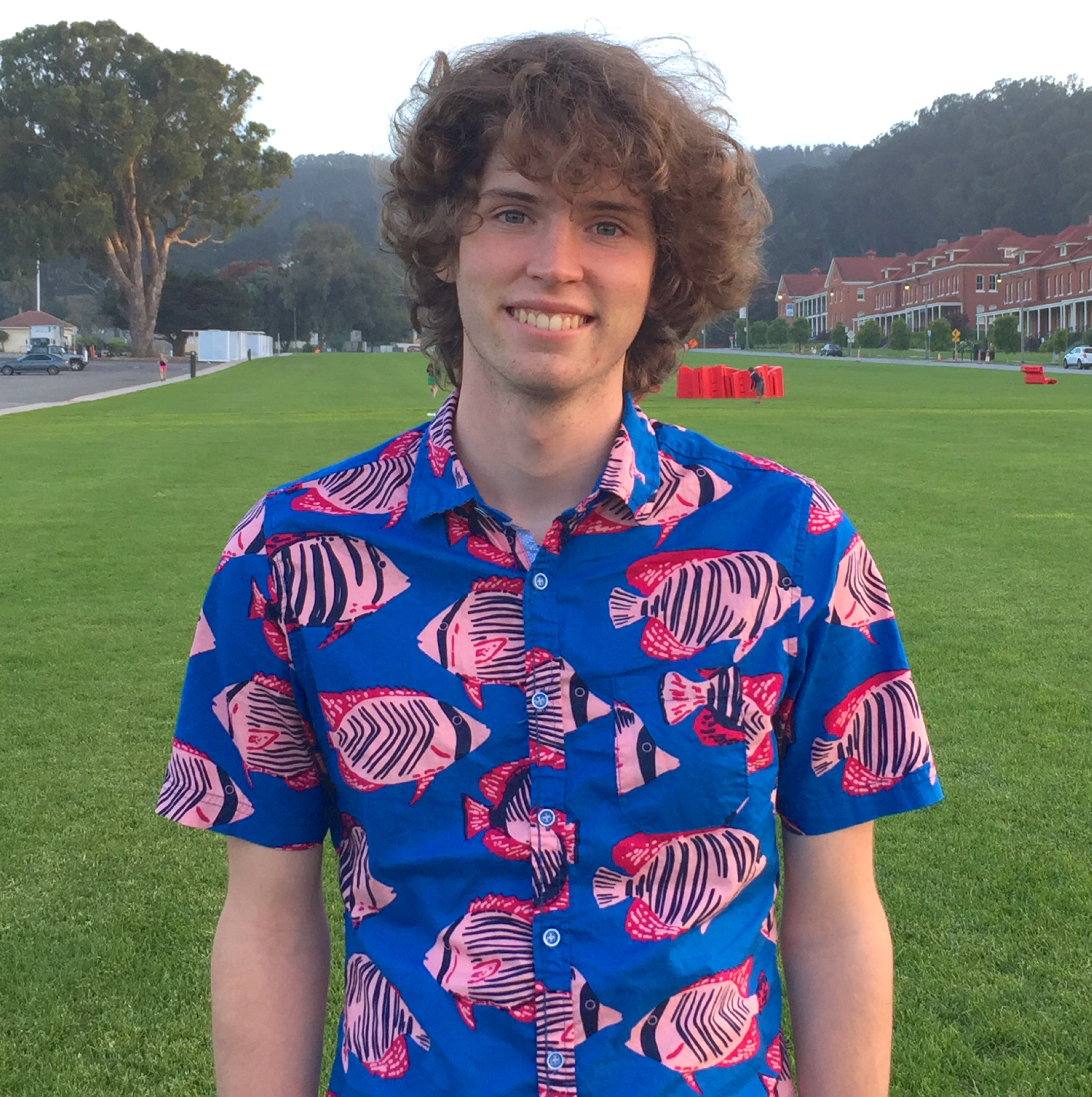
Freddy Reiber

Freddy Reiber

PhD student in CDS studying how society influences technology and how technology influences society.

Lingyi Xu

Lingyi Xu

PhD student in CDS addressing the challenge of modality missingness in multimodal learning across visual, tabular, and textual data.

Yan (Stella) Si

Yan (Stella) Si

PhD student in CDS working at the intersection of cognitive science and AI.

COMING UP

Computational MethodologyFriday, February 20, 2026

Propagating Surrogate Uncertainty in Bayesian Inverse Problems

by Andrew Roberts

Standard Bayesian inference schemes are infeasible for inverse problems with computationally expensive forward models. A common solution is to replace the model with a cheaper surrogate. To avoid overconfident conclusions, it is essential to acknowledge the surrogate approximation by propagating its uncertainty. At present, a variety of distinct uncertainty propagation methods have been suggested, with little understanding of how they vary. To fill this gap, we propose a mixture distribution termed the expected posterior (EP) as a general baseline for uncertainty-aware posterior approximation, justified by decision theoretic and modular Bayesian inference arguments. We compare this distribution to popular alternatives, present an approximate Markov chain Monte Carlo sampler for EP-based inference, and highlight future directions.

Location: CDS 1635Time: 12:00 PM - 1:00 PM

Get Involved

Ready to join our community of learners, researchers, and innovators?